
Socialist Voice Review

27 May 2026
In our April review of Socialist Voice we spent some time analysing an article on the CPI website, Working-class Anger, an extraordinary fanciful and deluded piece that declared the fuel protests as “…a textbook expression of working-class anger”. We return to this article, firstly because there is a related and contradictory article in the May issue of Socialist Voice and also because there was a section of the article that could not be commented on until after May Day: “This moment demands coordinated action. A national mobilisation on May Day, rooted in workplaces and communities across the country, should now be organised to give collective expression to the anger that exists and to assert a clear, independent working-class alternative”. That’s what the article stated. Did anyone notice a national mobilisation on May Day? Did anyone notice any organisational activities by the CPI related to this proposed mobilisation?
The article was full of nonsense and the supposed mobilisation lark was just another example of how far out of touch with reality the CPI is. The most extraordinary thing is that the post is still on the website. Getting an analysis entirely wrong is one thing but sticking to it long after it has been debunked is just unacceptable. The post could have been quietly taken down and few would have noticed. However, it is still there while an entirely contradictory article sits along side it in Socialist Voice.
In Fuel Protests: Farmers, Small Business and Rural Communities Under Pressure, Tommy McKearney takes a much more considered and contradictory approach to the Working-class Anger nonsense: “Although the cost-of-living crisis generated a degree of empathy for the disruption (and discomfort for the coalition) from the less well-off and hard-pressed working people, the genesis of the conflict was neither labour-led nor inspired.”
.”…the genesis of the conflict was neither labour-led nor inspired.”

“All things considered, the outcome of the protests demonstrated the nature and make-up of the 26-county Irish state. Faced with a rebellious cohort of some of those who normally wholeheartedly support the privilege-granting status quo, the government conceded to their demands. Of note was the fact that the price reductions were largely confined to petrol and diesel, with little done to alleviate the plight of low-income households depending on kerosene for home heating.”
In the Working-class Anger article, the trade union movement came under attack for not either leading or participating in the protests while right-wing groups were credited with being organised to take advantage of the protests. Needless to say, the CPI did not analyse why it was not a leading force in the protests or even why it was not in a position to take advantage of the situation.
McKearney again takes a different approach: “There is a need that a strong signal be delivered to all in authority making it clear such an outcome will not be tolerated. Only one group currently has the wherewithal to carry this out, and that is the trade union movement. Encouragingly, after a meeting last month of the Labour Employer Economic Forum (LEEF), which brings together trade unions, employers, and government representatives, ICTU General Secretary Owen Reidy said: “…Our message to the Government today was clear: stop caving in to business demands at the expense of workers’ living standards.”
“It is very important that every section of left-wing opinion in Ireland demonstrates its backing for the stance adopted by the ICTU and endeavours to ensure that they have the support necessary to make good on their warning to government.”
The CPI leadership is strongly advised to read its own material in Socialist Voice.
It must be noted that the contradictions exposed in the CPI approach to the fuel protests do not suggest an environment of healthy debate. Rather, they highlight the enduring chaos of a party that cannot even get its story straight. Its chronic internal lack of organisation and direction is perfectly reflected in its public presentations. There is no excuse for either deficiency and the continuing failure to address those issues shows that the CPI has lost all concept of self-respect.
How to talk yourself out of a job
The attack on the trade union movement continues in CPI Mayday Greetings to the Working Class.
“The recent protests against the price of petrol reflect the alienation, anger, frustration and hopelessness within society, in particular among the working class, family farmers and the self-employed. Unfortunately the voice of organised labour was not heard during the protests. Instead of leading the protests, the trade union movement watched from the sidelines. The protests offer lessons to the trade union movement. Direct action, which includes protests on the streets and economic disruption, is effective. This is something that the trade union movement understood and practised in the past. Workers must begin to learn old lessons of union organisation and strike action as the only effective means not only to defend what they already have, but to improve their wages and conditions.”
What about the role of the CPI? Did the CPI have a blueprint of proposed actions ignored or rejected by the trade union movement? Had the CPI communicated anything at all to the trade union movement? Particularly on May Day, the CPI might have made some effort to assert itself or even try to look relevant. Instead, it abdicates all responsibilities to the trade union movement while it gently settles back into its comfortable cultish norm.
Read that line again: “Workers must begin to learn old lessons of union organisation and strike action as the only effective means not only to defend what they already have, but to improve their wages and conditions.”
The “only effective means”? There was a time when another old lesson prescribed that a communist party was the only effective means to liberate the working class.
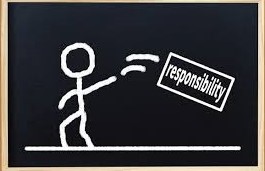
The trade union movement and other progressive social movements would be an important addition to that struggle.
Meanwhile, the website has been updated three times in May though none of the updates related to any actual political campaigning or organisation.
The CPI really needs to get a grip.