
“What is the Communist Party?” (Part 5)
In this concluding chapter answering the question “What is the communist party?” we look at the phenomenon of enduring weak leadership, a permanently compliant membership, poor strategies, and the history of pernicious ‘conflict resolution’ tactics within the Communist Party of Ireland.
We received a comment after our last post that the current CPI leadership inherited a poisoned chalice and we have a certain sympathy with that analysis. The questions is: who poisoned the chalice?
Anyone looking at the party knows what needs to be done: first and foremost, restoration of democracy and adherence to its constitution. Only then can there be any possibility of a new start, of a new direction. If the party cannot even manage its affairs within its own rules, then how can anyone expect or trust any analysis it makes of the wider political environment? Who will turn the party around? Are the leaders and members of the CPI capable of the task of even starting to save the party?
A major obstacle facing the party is the continuing ‘strategy’ of solving disputes of opinion by metaphorically killing the bearer of the message.

Apart from the calamitous effects within the party the other major problem is that such a strategy cannot be carried into the outside world. In approaching working people, the party can not coerce or threaten or browbeat or ignore them. It has to find a way not just to make an approach but also to make that approach both practical and attractive. However, as long as the opposite culture prevails inside the party then it is impossible to go forward in any meaningful or constructive way.
In 1969, US National Security Adviser, Henry Kissinger, offered an explanation of the US failure in Vietnam that is applicable to the ongoing exposé by Guerrilla Communists of the dire-straights of the CPI:

We fought a military war; our opponents fought a political one. We sought physical attrition; our opponents aimed for our psychological exhaustion. In the process we lost sight of one of the cardinal maxims of guerrilla war: the guerrilla wins if he does not lose. The conventional army loses if it does not win.
Not a single allegation levelled at the CPI by Guerrilla Communists has been rebutted, denied, corrected or in any way whatsoever countered by the CPI. After the wave of expulsions, the leadership fully expected that the dust would settle in the usual way and then they could resume normal operations. That was a fateful mistake: some expelled members went on to form the Irish Communist Party and others decided to confront the party directly. In those moments, the party lost all control over the situation and it remains out of control to this day.
However, in some respects, it is fully controlled by outside forces as a consequence of its recklessness and arrogance as can be judged by its utter silence on every accusation levelled against it.
What is to be done?

The leadership must resign – the state of the party itself is enough to justify that conclusion.
An utterly compliant party membership, unfortunately, accurately reflects the leaderships’ opportunistic, spineless and shameful destruction of the CPI. While initially a number of party members expressed solidarity with the many members who had been unjustly expelled, they soon settled down to toeing the line and settling in to their comfortable and unchallenging (anything) existence.
However, if the party is to redeem itself, it is these members who must take a stand. That initial recognition by a handful of members of the injustices that were imposed on other members represented the basic decency that is required for any human being to be a communist.
The choice is clear: continue to endorse the injustices that occurred inside the party or take a stand and start the process of building the party.
So, yes, the current leadership did inherit a poisoned chalice. The irony, however, is that they poisoned their own chalice.
The rot
The rot set in a long time ago. Weak leadership is the curse of any organisation. Weak leaders are fearful – fearful of everyone and everything. Consequently, they have to be in control no matter what the cost.
They have to stay in control and they have to groom the next generation of leaders in their image. And, for a least the last forty years and to today, that is exactly what befell the Communist Party of Ireland. There was an opportunity at the 2022 National Congress to break the cycle but they were too weak to do it. So weak, indeed, that they did not even consider it. At each turn, the calibre of leadership becomes weaker and weaker until it arrives at exactly where it is today.
Worse still, the current leadership is not only weak but hopelessly compromised by their own actions and by their complicity in outrageous infringements of party democracy and discipline. They conspired with the outgoing leadership in these infringements and were either unaware they were about to inherit the resulting legacy or were perfectly happy to do so.
Either way, they are now silent. Not as much as a whimper of defence against the very serious charges that have been repeatedly levelled against them individually and collectively. A National Chairwoman, a General Secretary and a National Executive Committee unable to defend themselves as individuals – or as a collective – against allegations of secrecy and subterfuge, operational thuggery and of crude vindictive and personalised attacks on members of their own party.
As we stated earlier, the party had a great opportunity to turn things around – the 2022 Congress – and it blew it. The congress followed immediately after the wave of expulsions and it was the perfect moment for a complete redrawing of all its operations. Most importantly, it provided an opportunity to re-examine how some situations had been handled. All this could have been achieved without anyone losing any face if approached with the necessary tact.
Instead, they had a nice cosy congress, once again declared themselves the elite warriors of the working class, slapped themselves on the back and resumed normal disarray. Glaringly missing were any signs of courage or genuine comradeship.

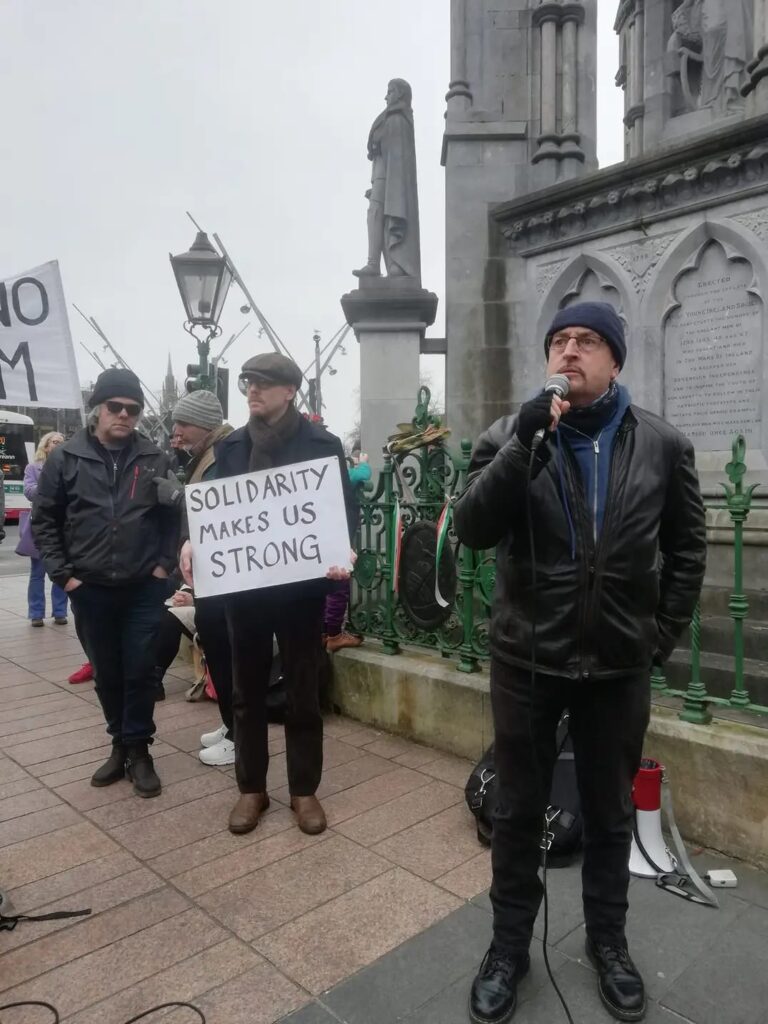
Preaching social justice?
As a consequence, Ciara Ní Mhaoilfhinn and Jimmy Corcoran will either not survive the next national congress or the CPI will not survive the next national congress. Actually, it is likely that neither of them will even make it to the next congress. The entire membership of the National Executive Committee – operating under its own rule of democratic centralism – are also individually and collectively guilty of conspiring and/or engaging in the behaviours described above.
Treating people fairly?
In the CPI, such actions have become routine. It was not always like this: in the past, rules were observed though similar methods were employed to achieve the same result – intimidation, undermining, whispering campaigns, blocking initiatives and deliberate misrepresentation, all the base methods of bullying until the targets got the message. All with just a hint of sophistication.
The current leadership could have achieved their aims by similar methods but even that degree of planning or strategy was too much for them.
They could have stayed within the party constitution, within the various standing orders and still have secured pre-determined outcomes. Had they managed (pun intended) to do that they would have avoided most of the questions they face today.
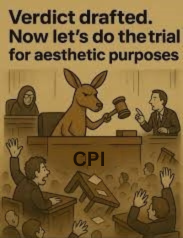
In more recent times, it is difficult to determine if the “the rules-based order” concept originated in the CPI or whether the CPI was an early convert to these methods. Basing its attacks on ‘undesirable’ members on lofty ideals, the leadership, at all levels, openly and blatantly ignored party rules. The targets were secretly subjected to a mob-rule experience where the committee structures – at branch, area and national levels, proceeded to attack individual members without reference to the rest of the membership in such a way that the target had no form of appeal and the requirement of a committee to report to, or consult with the membership was dispensed with.
When leadership, at every level in the party, dispensed with the imperative of involving the membership in decision-making, the ultimate attack on party democracy was finally exposed. Above all, these ‘leaders’ displayed their contempt for, and distrust of, the ‘ordinary’ membership.
It is also the ultimate exposure of the personal and political morality of all the ‘leaders’ involved. Democratic centralism does not provide a safe haven for people who got involved is such antics just as ‘I was only acting under orders’ does not protect people who infringe various recognised standards.
Needless to say, this assault on democracy certainly achieved its desired results. However, not being the best planners or strategists, these hapless warriors forgot that sometimes you have to clean up your mess.

The law of unintended consequences eventually kicked in and ever since, the party has been hit with claim after claim after claim that it has not been able to respond to in any way.
It is unprecedented for a political party to allow itself to be accused of so many infringements and fail to respond in any way. Utterly paralysed, the CPI fell into silence. Not a word of denial, rebuttal or correction has emerged from its ranks despite the barrage of allegations laid at its door. Not a word. Nor, has it been able to undo the damage it did, mostly to itself.
Worse still, it not only stands by its positions but it has turned down overtures to try to find resolutions.
Sad reality
That is the sad reality of the CPI today. Lacking the courage to approach those it has wronged, it has to sit there and suffer question after question, allegation after allegation. It dare not respond because the consequences of defending itself – without first having resolved the outstanding allegations – would destroy not just the reputations of its leadership but would destroy the party itself.
The consequences do not stop there. If the leadership does not find the courage to clean up its own mess, then that mess will haunt it no matter what it does. Staying silent is not an answer – it simply entrenches the party further the longer it goes on.
The devious manipulations, abuses of power and disregard for consequences don’t look so clever now.
Background reading: